
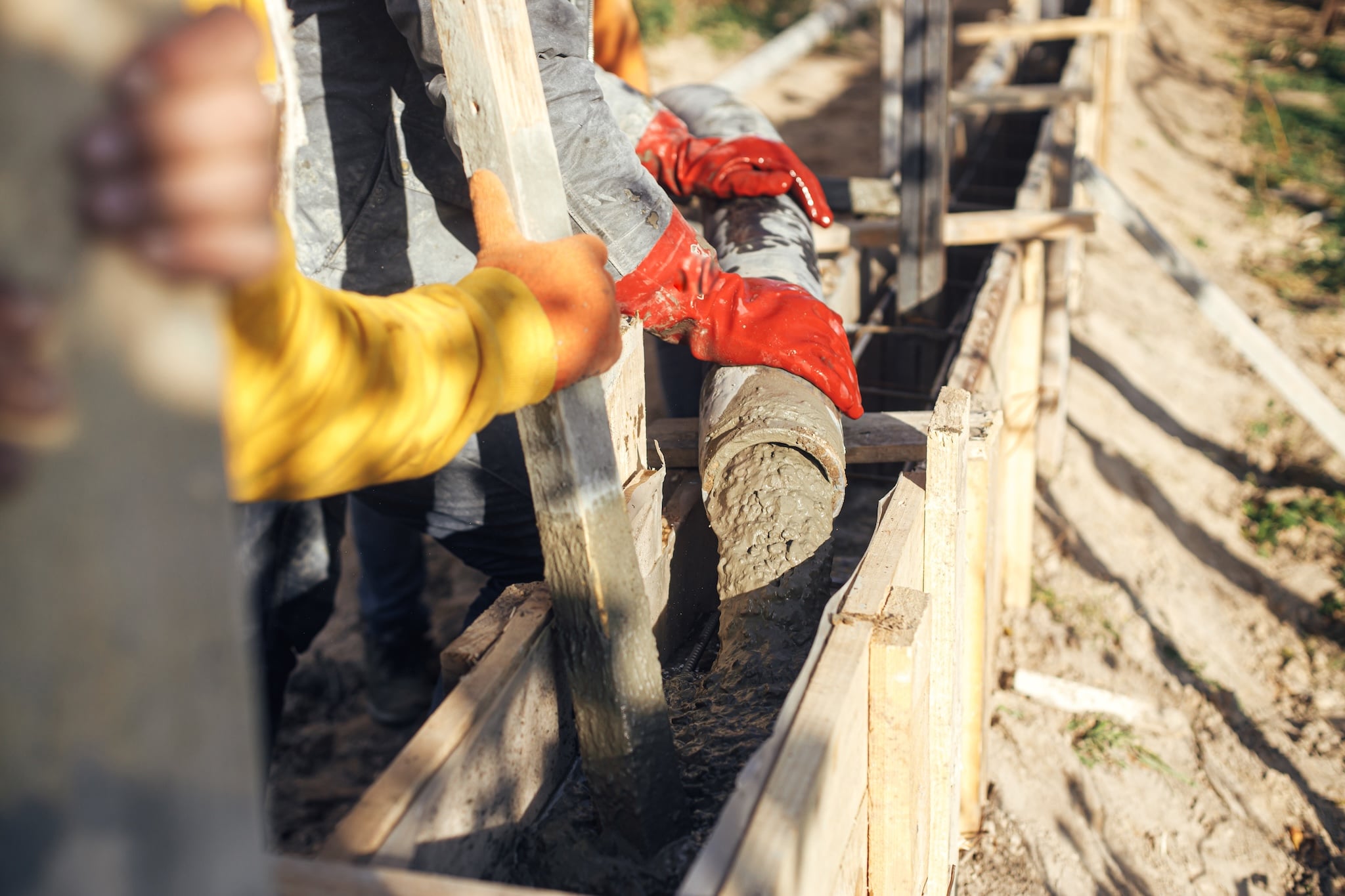
Good concrete does not happen by accident. It is the result of sound specifications, disciplined field practice, and a shared commitment across the supply chain to build things that last. In Michigan, where freeze-thaw cycles are relentless, road salt is a fact of life, and infrastructure is expected to perform for decades, the gap between concrete built to standard and concrete that falls short of it shows up fast and costs a great deal to fix.
The Michigan Concrete Association connects ready-mix producers, contractors, engineers, pavers, and suppliers with the technical resources, training, and industry guidance needed to do the work right from the start. This page covers the foundational standards and best practices governing concrete production and construction in Michigan, along with the resources MCA provides to help professionals at every level stay current and build with confidence.
Why Concrete Standards Matter in Michigan
Michigan's climate creates conditions that test concrete performance year-round. Freeze-thaw cycles, road salt exposure, wide temperature swings, and heavy traffic loading all place specific demands on concrete mix design, placement, and finishing. Standards exist to translate decades of field experience and scientific research into practical guidance that protects project quality, extends service life, and reduces the cost of early failure.
Standards also establish a common language across the supply chain. When producers, contractors, engineers, and owners work from the same specifications, the risk of miscommunication, material substitution errors, and construction defects decreases substantially. Industry-wide consistency is not a bureaucratic goal. It is a practical one.
The Cost of Ignoring Standards
Concrete that does not meet established standards does not always fail immediately. Surface scaling, premature cracking, reduced load capacity, and durability issues may emerge over months or years after placement. By that point, the cost of correction typically far exceeds the cost of getting the mix design, placement, and curing right the first time.
Michigan's public infrastructure, commercial construction, and residential concrete all carry long-term performance expectations. Standards-based work backs up those expectations.
Core Concrete Standards Relevant to Michigan Projects
Several national and state-level standards frame the technical requirements for concrete in Michigan. Understanding which standards apply to your work and how to implement them correctly is foundational to quality control.
ASTM International Standards
ASTM International publishes the most widely referenced concrete material and testing standards used in the United States. Key standards relevant to Michigan concrete work include the following:
ASTM C94 governs ready-mixed concrete, covering mixing requirements, delivery limits, and slump at the point of discharge. This standard is the baseline for most ready-mix operations in Michigan.
ASTM C150 covers Portland cement specifications, including chemical and physical requirements that affect early strength development, heat of hydration, and long-term durability.
ASTM C260 and ASTM C494 address air-entraining admixtures and chemical admixtures, respectively. Both are critical for freeze-thaw resistance and workability in Michigan conditions.
ASTM C1064 establishes procedures for measuring the temperature of freshly mixed concrete, a factor that directly affects hydration rate, finishing windows, and cold-weather placement risk.
ASTM C31 and ASTM C39 govern the making and curing of test specimens and compressive strength testing procedures. These are the foundation of any quality control program on the jobsite.
ACI Committee Reports and Guides
The American Concrete Institute (ACI) publishes committee reports and guides that translate material standards into practical construction guidance. Several ACI documents are particularly relevant to Michigan work:
ACI 301 serves as a specification for structural concrete and is frequently referenced in project specifications for commercial and infrastructure work.
ACI 305R guides hot weather concreting, a concern during Michigan summers when rapid evaporation and elevated concrete temperatures can compromise surface quality and hydration.
ACI 306R addresses cold weather concreting, which is a pressing concern in Michigan given the length and severity of the winter construction season. This guide covers temperature minimums, protection methods, and curing requirements.
ACI 308 covers concrete curing, a frequently overlooked phase of construction that significantly affects surface durability, strength gain, and long-term performance.
Michigan Department of Transportation Specifications
Contractors and producers working on Michigan DOT projects operate under MDOT's Standard Specifications for Construction and related special provisions. MDOT specifications establish requirements for concrete class, admixture use, air content, compressive strength, and testing frequency on public road and bridge projects.
MCA maintains ongoing engagement with MDOT and the broader policy process to ensure that specification updates reflect current industry knowledge and are practical to implement in the field. Members benefit from staying connected to MCA communications when specification changes are under development or newly adopted.
Best Practices for Mix Design
A well-designed concrete mix is the foundation of everything that follows. The mix must be appropriate for the exposure conditions, the structural requirements, the placement method, and the finishing expectations of the project.
Water-to-Cementitious Materials Ratio
The water-to-cementitious materials ratio (w/cm) is one of the most direct levers controlling concrete durability. Lower w/cm ratios produce denser, less permeable concrete that resists chloride intrusion, freeze-thaw damage, and scaling. For Michigan exterior flatwork exposed to deicing salts, a maximum w/cm of 0.45 is a common industry standard, with some specifications requiring 0.40 for higher durability classes.
Slump adjustments on the jobsite by adding water are one of the most common and damaging mix design deviations. Water additions after batching increase the effective w/cm, compromise strength gain, and increase bleed water, all of which reduce surface durability. Proper mix design and admixture use at the plant is the correct solution to workability needs.
Air Entrainment for Freeze-Thaw Resistance
Michigan's climate makes air entrainment a non-negotiable component of exterior flatwork and most pavement concrete. Entrained air voids provide relief for water expansion during freezing, preventing internal disruption of the paste. Total air content targets typically range from 5% to 7% for coarse aggregate mixes exposed to freezing and thawing, though exact targets depend on aggregate size and exposure class.
Air content must be verified at the point of placement, not just at the truck discharge, because air can be lost during pumping, extended haul times, and aggressive finishing practices. Understanding how your specific placement method affects air content is part of responsible quality control.
Supplementary Cementitious Materials
Fly ash, slag cement, and silica fume are routinely used in Michigan concrete mixes to improve performance, reduce heat of hydration, and partially replace Portland cement. Each SCM brings specific benefits and trade-offs related to early strength gain, set time, and finishing characteristics.
Fly ash, particularly Class C and Class F fly ash, is widely available in Michigan and commonly used in flatwork, structural concrete, and pavement. When properly proportioned and cured, fly ash concrete typically achieves comparable or superior long-term strength and reduced permeability compared to straight cement mixes. However, fly ash mixes require careful attention to curing because slower strength gain in early ages means the surface is more vulnerable to damage if curing is shortened.
Best Practices for Concrete Placement
Placing concrete correctly is where mix design performance is either realized or lost. Deviations from good placement practice can compromise the work of everyone upstream in the supply chain.
Subgrade and Subbase Preparation
Concrete placed on inadequately prepared subgrade is at risk of settlement, cracking, and poor drainage. The subgrade should be properly graded, compacted, and of uniform bearing capacity. Soft spots, frozen ground, or poorly drained areas must be addressed before concrete is placed.
For slabs on grade, a well-compacted granular subbase reduces moisture migration from below and provides a stable, uniform bearing surface. Thickness and material requirements vary by application and are typically established in the project specifications.
Consolidation
Proper consolidation removes entrapped air voids and ensures that concrete fills the form completely, encases reinforcement, and produces a dense, uniform mass. Internal vibration is the most reliable consolidation method for most structural applications. Vibrators should be inserted at regular intervals, moved slowly through the concrete, and withdrawn gradually to avoid leaving channels.
Over-vibration can cause segregation and loss of entrained air. Under-vibration leaves voids and weak planes. Both are avoidable with proper equipment and trained operators.
Finishing Flatwork
Concrete flatwork finishing is highly sensitive to timing. Beginning finishing operations while bleed water is still on the surface traps water in the surface layer, producing a weak, porous zone that is prone to scaling and dusting. Waiting for bleed water to evaporate and for the concrete to reach the right stiffness before beginning finish operations is a disciplined practice that separates high-quality flatwork from problem slabs.
In hot or windy weather, the evaporation rate may exceed the bleed water rate, requiring protective measures to prevent plastic shrinkage cracking before finishing can be completed. ACI 305R guides calculating evaporation rates and identifying when protection is needed.
Best Practices for Curing
Curing is the maintenance of adequate moisture and temperature in freshly placed concrete to support continued hydration and strength development. It is also one of the most frequently neglected phases of concrete construction.
Why Curing Duration Matters
Concrete gains strength through the chemical reaction between cement and water. That reaction requires moisture. If the surface dries prematurely, hydration stops, strength development slows, and the surface layer becomes weak and porous. Even if the interior of the slab eventually reaches design strength, the surface exposed to traffic, weathering, and deicing chemicals may not.
Standard recommendations call for a minimum of seven days of moist curing for concrete exposed to moderate to severe conditions in Michigan. Longer curing periods, particularly for mixes containing fly ash or slag, support continued strength gain and improved surface durability.
Curing Methods
Curing compounds, wet burlap covered with polyethylene sheeting, and insulating blankets are the most common curing methods used in Michigan. Each has appropriate applications depending on the type of work, the season, and the project specifications.
Curing compounds should be applied to a freshly finished surface at the proper rate and coverage. Under-application reduces effectiveness. Some curing compounds are not compatible with subsequent adhesive applications or floor coatings, so product selection should account for the finish requirements of the space.
In cold weather, insulating blankets serve the dual purpose of retaining heat and maintaining moisture. Cold weather concrete placement requires a full protection plan before work begins, not reactive adjustments after concrete is in the ground.
Quality Control and Testing
A quality control program is not a paperwork exercise. It is the mechanism by which producers and contractors verify that the concrete being placed meets the agreed specifications and will perform as intended.
Fresh Concrete Testing
Standard fresh concrete tests include slump or slump flow, air content, temperature, and unit weight. These tests must be performed at the right time and location. Testing at truck discharge does not always reflect conditions at the point of placement, particularly when pumping is involved.
Test cylinder sampling should follow ASTM C31 procedures, including proper consolidation, curing, and chain of custody to the testing laboratory. Samples that are not handled correctly produce unreliable results that do not reflect actual concrete strength.
Hardened Concrete Testing
Compressive strength testing at 28 days is the most commonly specified acceptance criterion for structural concrete. Some specifications include 56-day strength testing for mixes containing supplementary cementitious materials. When early access to a structure is required, 7-day breaks can provide an indication of strength gain trajectory, though they should not substitute for 28-day results in acceptance decisions.
When test results fall below specified minimums, the response must be systematic. Core testing, load testing, or engineering evaluation may be needed to determine whether the in-place concrete meets structural requirements. MCA technical resources and staff can help members understand their options when test failures occur.
Resources Available Through MCA
The Michigan Concrete Association exists to support the technical proficiency, professional development, and business success of Michigan's concrete industry. Members and industry professionals have access to a range of technical resources, training programs, and certification opportunities.
Technical Publications and Guidance
MCA provides access to technical guidance documents, reference materials, and resources developed by ACI, ASTM, and other industry organizations. Members benefit from MCA's work to translate national standards into a Michigan-specific context, particularly on topics like cold weather concreting, pavement design, and durability in freeze-thaw environments.
Explore MCA's technical resources
Training and Certification Programs
MCA offers training aligned with industry certification programs, including ACI certification for concrete field testing technicians, flatwork finishers, and other roles. Certified technicians are better equipped to perform quality control work correctly, recognize field problems early, and protect project outcomes.
View available training and certification programs
Industry Advocacy and Specification Engagement
Standards do not exist in isolation. They are shaped by policy decisions, research, and industry engagement. MCA participates in the development and review of specifications affecting Michigan's concrete industry, working to ensure that standards reflect current practice and are workable in the field.
Members benefit from MCA's advocacy work by staying informed about upcoming specification changes and having a collective voice in the process.
Learn about MCA membership and advocacy
Additional Technical Reference
For peer-reviewed research on concrete durability, freeze-thaw performance, and long-term infrastructure outcomes, the National Institute of Standards and Technology (NIST) Building and Fire Research Laboratory publishes technical studies and reference data used by engineers and specifiers across the industry. NIST resources complement ACI and ASTM standards with independent research applicable to concrete performance in demanding climates like Michigan's.
Frequently Asked Questions About Concrete Standards
Standards Are the Starting Point. MCA Helps You Use Them.
A specification on paper only matters if the people building from it understand it, apply it correctly, and have the training and support to do so consistently. That is what MCA does for Michigan's concrete industry. Not just publishing guidance, but connecting producers, contractors, engineers, and decision-makers with the resources that make better concrete possible on real projects across the state.The standards covered on this page are a foundation, not a ceiling. MCA's technical guidance, certification programs, and advocacy work exist to help Michigan's concrete professionals go further, build more durably, and stay ahead of the specification changes that shape every project. When you need reliable technical information, quality training, or a connection to Michigan's broader concrete community, this is where it starts.
Explore Resources